
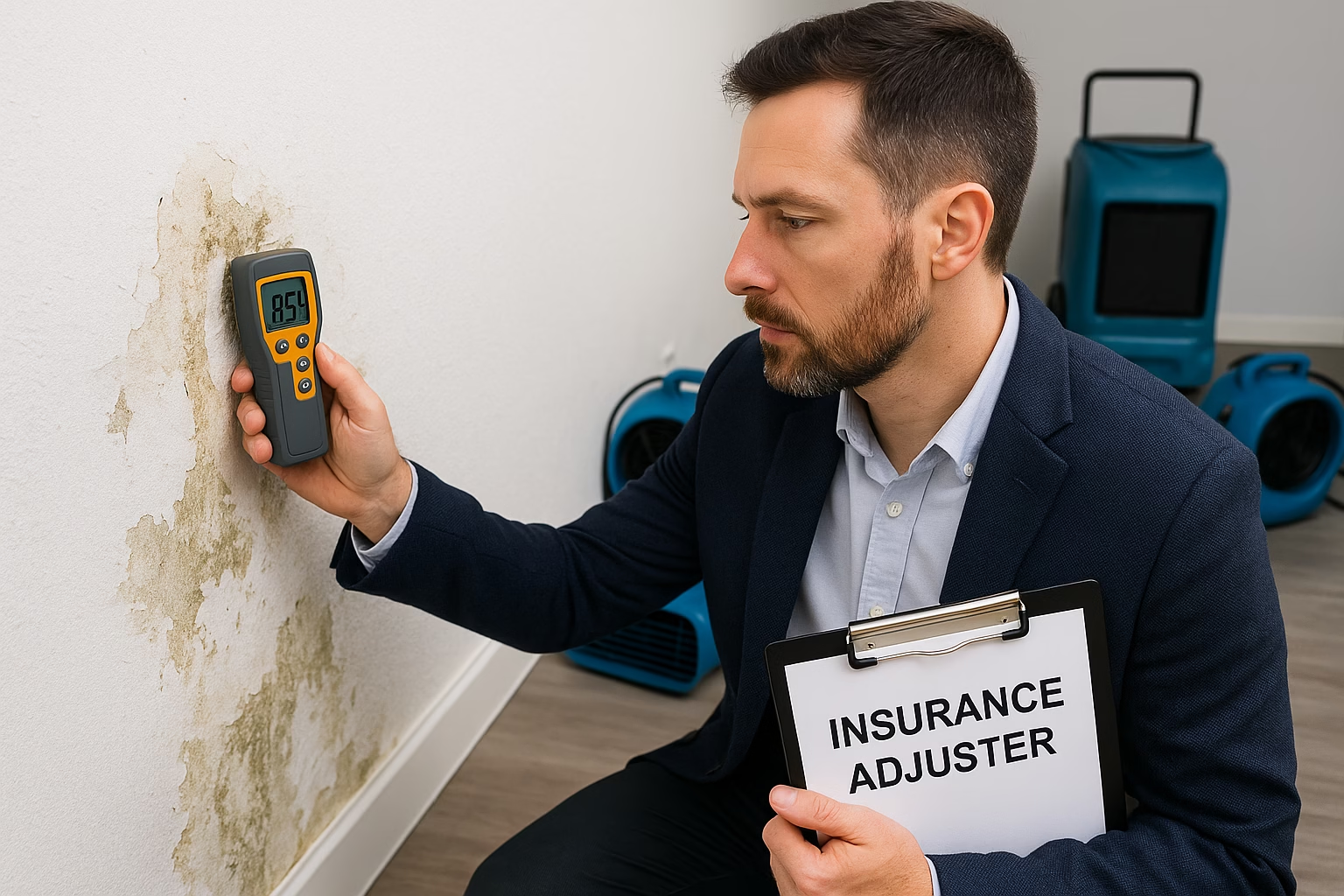
When an insurance adjuster arrives at a water damage site, they're not just looking at wet floors and soggy drywall. They're evaluating two fundamentally different restoration phases: water extraction and structural drying. Understanding this distinction matters because adjusters assess costs, timelines, and claim legitimacy based on how these phases are documented and executed. Misrepresenting one for the other can delay claims or result in partial denials.
Water Extraction: The First 24-48 Hours
Water extraction is the immediate removal of standing water from affected areas. This phase typically begins within hours of the initial damage and focuses on eliminating visible, pooled water using pumps and extraction equipment.
Adjusters evaluate extraction based on several concrete factors:
- Volume removed: Documented in gallons or cubic feet, often measured by truck-mounted extraction units
- Water category: Clean water (Category 1), gray water (Category 2), or black water (Category 3) determine equipment requirements and disposal costs
- Extraction method: Submersible pumps for deep standing water, truck-mounted extractors for carpets, or portable extractors for smaller areas
- Response time: Industry standard is 4-6 hours for emergency extraction to prevent secondary damage
The cost structure for extraction is relatively straightforward. According to IICRC S500 standards, extraction equipment rental runs $150-$400 per day for commercial-grade units, with labor typically billed at $75-$125 per hour per technician. A standard residential extraction job averaging 500 square feet costs between $1,200 and $2,500.
Structural Drying: The 3-7 Day Process
Structural drying begins after extraction removes standing water. This phase addresses moisture absorbed into building materials—subfloors, wall cavities, insulation, and structural framing. While extraction removes 95% of water by volume, structural drying handles the remaining 5% that causes long-term damage.
Adjusters scrutinize structural drying more intensely because it represents 60-70% of total restoration costs and requires ongoing monitoring. They look for:
Equipment Placement and Density
The IICRC recommends specific equipment ratios based on affected square footage and material types. For Class 2 water damage (affecting carpet and up to 24 inches of wall), the standard is one air mover per 50-75 square feet and one dehumidifier per 500-1,000 square feet.
Adjusters verify equipment counts against daily logs. Over-equipment claims—placing 10 air movers in a 300-square-foot room—raise red flags. Under-equipment setups that extend drying time beyond industry standards also trigger scrutiny.
Moisture Readings and Documentation
Daily moisture readings are non-negotiable. Adjusters expect to see:
- Initial baseline readings taken within 24 hours of loss
- Daily readings from the same test locations using calibrated moisture meters
- Specific gravity readings for dehumidifier performance (target: 0.40-0.60 grains per pound)
- Final dry standard readings matching unaffected areas of the same material
A legitimate structural drying job shows progressive moisture reduction. Stagnant readings over 3-4 days indicate equipment problems, hidden water sources, or improper setup. Adjusters will question charges for days when no measurable progress occurred.
Drying Time Benchmarks
Industry standards provide clear timelines based on water damage classification:
| Class | Description | Typical Drying Time |
|---|---|---|
| Class 1 | Minimal absorption, limited area | 2-3 days |
| Class 2 | Significant absorption, carpet and walls | 3-5 days |
| Class 3 | Greatest absorption, ceilings, walls, insulation | 5-7 days |
| Class 4 | Specialty drying (hardwood, plaster, concrete) | 7-14 days |
Claims extending beyond these windows without documented complications face adjustment or denial. Adjusters specifically look for evidence of issues like continuous water intrusion, HVAC system problems, or high ambient humidity that would legitimately extend drying time.
Cost Structures Adjusters Validate
The financial breakdown between extraction and drying reveals why adjusters examine each phase separately.
Extraction costs are front-loaded and equipment-intensive but labor-light. A typical invoice shows:
- Emergency response fee: $300-$500
- Extraction equipment: $150-$400 per day
- Labor: 4-8 hours at $75-$125/hour
- Disposal fees (if applicable): $100-$300
Structural drying costs accumulate daily and include:
- Air mover rental: $30-$50 per unit per day
- Dehumidifier rental: $75-$150 per unit per day
- Daily monitoring visits: 1-2 hours at $75-$125/hour
- Electricity consumption: $15-$40 per day (often billable)
For a standard Class 2 job requiring 4 air movers, 1 dehumidifier, and 4 days of drying, the structural drying phase alone costs $1,800-$3,200—often exceeding extraction costs.
Red Flags That Trigger Adjuster Scrutiny
Experienced adjusters recognize patterns that indicate inflated claims or improper procedures:
Premature equipment removal: Pulling equipment after 2 days on a Class 3 loss without achieving dry standard readings suggests either incomplete work or initial over-classification.
Inconsistent moisture readings: Readings that jump erratically or show materials drying faster than physically possible (hardwood flooring reaching dry standard in 24 hours) indicate fabricated documentation.
Equipment without corresponding progress: Billing for 8 air movers and 2 dehumidifiers over 6 days while moisture readings barely change suggests equipment wasn't operational or properly positioned.
Missing psychrometric data: Professional structural drying requires tracking temperature, relative humidity, and dew point. Invoices lacking this data often face adjustment.
Documentation That Supports Both Phases
Adjusters approve claims faster when restoration companies provide phase-specific documentation:
For extraction:
- Photos of standing water with visible depth markers
- Extraction equipment specifications and capacity
- Water volume measurements (tank readings or truck capacity)
- Timestamp documentation showing response time
For structural drying:
- Daily moisture logs with specific readings and locations
- Equipment placement diagrams
- Psychrometric charts showing environmental conditions
- Photos documenting equipment positioning throughout the drying period
- Final dry standard certification with comparative readings
When Phases Overlap or Extend
Not all water damage follows a clean extraction-then-drying sequence. Adjusters understand legitimate scenarios where phases overlap:
Ongoing intrusion: Active roof leaks or plumbing failures may require continued extraction while drying equipment operates. This requires clear documentation of the ongoing source and remediation efforts.
Discovery of hidden moisture: Initial extraction may miss water that traveled through wall cavities or under flooring. Thermal imaging or invasive inspection revealing additional moisture justifies extended timelines and additional extraction work.
Material-specific requirements: Hardwood flooring, plaster walls, and concrete slabs have unique drying characteristics. Class 4 specialty drying legitimately extends timelines and requires specialized equipment like floor mat systems or injectidry systems, which adjusters expect to see documented.
The Adjuster's Perspective on Claim Legitimacy
Insurance adjusters aren't adversaries—they're gatekeepers ensuring claims reflect actual work performed according to industry standards. Their evaluation of extraction versus structural drying focuses on three questions:
1. Was the work necessary? Did the water damage classification justify the equipment and timeline used?
2. Was it performed correctly? Do moisture readings and equipment placement align with IICRC standards?
3. Is it properly documented? Can the restoration company prove daily progress and final achievement of dry standards?
Restoration companies that understand these evaluation criteria—and document both extraction and structural drying as distinct, measurable phases—experience faster claim approval and fewer disputes. The distinction isn't bureaucratic; it reflects the physical reality that removing standing water and drying structural materials are fundamentally different processes requiring different approaches, equipment, and validation methods.
More on the Blog
The Real Cost of Waiting 48 Hours on a Burst Pipe
A 1/8-inch crack in a water line can release up to about 250 gallons of water a day, and the damage accelerates fast. In the first 48 hours, that moisture can soak insulation,…
How to Spot Hidden Water Damage in Your Walls
Just 1 inch of water in a home can cause major damage and can begin fueling mold growth within 24–48 hours if materials stay wet. That’s why a small, unseen leak behind drywall…