
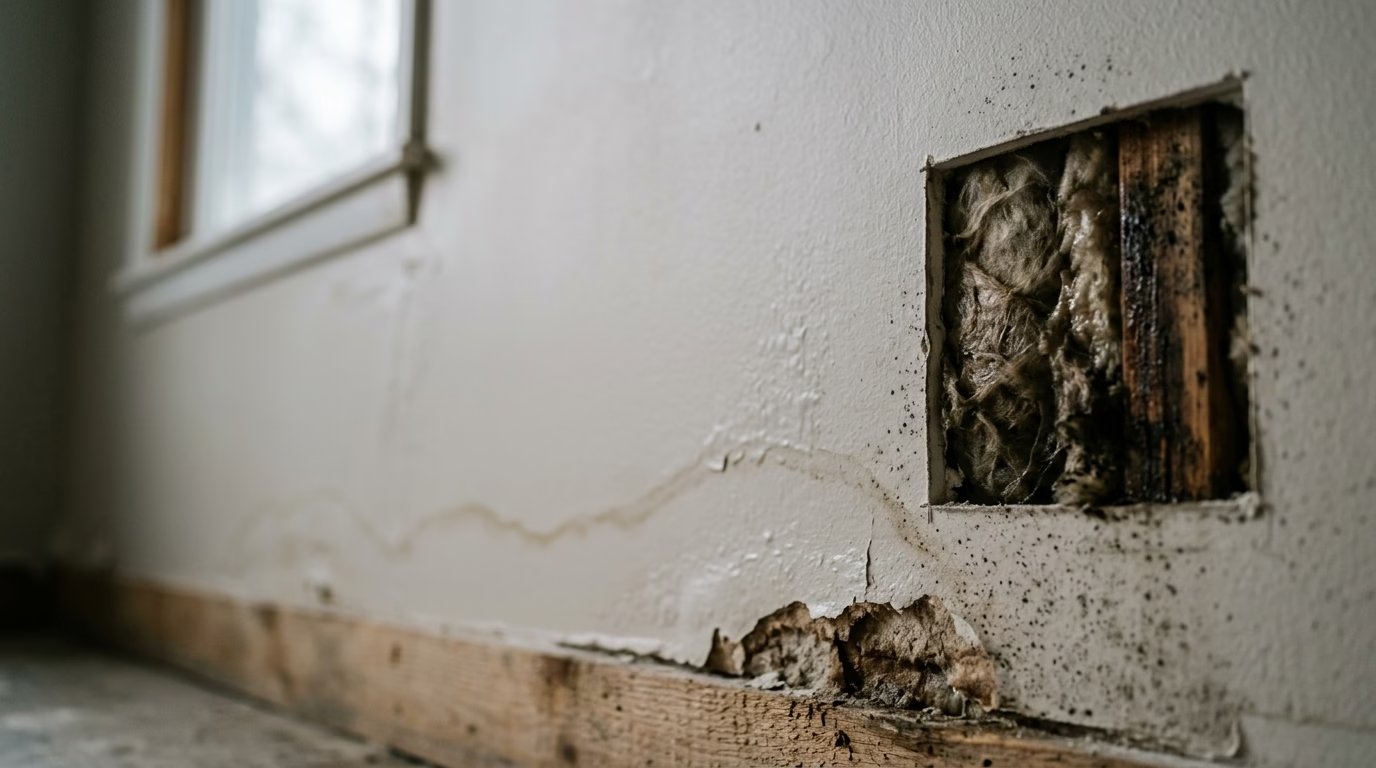
Just 1 inch of water in a home can cause major damage and can begin fueling mold growth within 24–48 hours if materials stay wet. That’s why a small, unseen leak behind drywall can quickly turn into ruined insulation, warped framing, and a much larger restoration bill. Knowing the early hidden water damage signs helps you act before a drip becomes a Category 2 or Category 3 water loss, especially if it’s coming from a supply line, drain, or roof penetration. In this article, you’ll learn what to look for—like staining, bubbling paint, musty odors, and temperature changes—plus simple ways to confirm a problem and when to call an IICRC-certified restoration pro.
How to Recognize Hidden Water Damage Signs Inside Walls
This section helps you identify the most dependable hidden water damage signs before the problem turns into a major repair. Hidden moisture behind drywall or plaster usually leaves a trail—if you know what to look for, smell for, and feel on the surface.
Visual clues that usually mean moisture is trapped behind drywall
Many wall leaks start small (a pinhole in copper, a loose PEX fitting, a failed shower pan, or a slow drip at a valve) and show up as subtle cosmetic changes first. Don’t ignore “minor” blemishes—if the source is active, the damage can spread into insulation, framing, and flooring.
- Staining or “tide lines” (yellow/brown rings, dark vertical streaks) that widen over days or weeks—often from plumbing supply lines, roof leaks, or window flashing failures.
- Bubbling, peeling, or cracking paint and soft or spongy drywall, especially near bathrooms, kitchens, laundry rooms, or exterior walls.
- Warped baseboards or swollen trim, nails “popping,” and separated joints—wood swells when it repeatedly absorbs moisture.
- Efflorescence (a white, chalky residue) on plaster, masonry, or basement walls—salt deposits left behind as moisture migrates and evaporates.
Odor, touch, and temperature changes that point to a hidden leak
Your nose and hands can catch what your eyes miss. A persistent musty smell can indicate microbial growth in a wall cavity, and temperature shifts can signal evaporative cooling from wet materials. If you suspect contamination (for example, a sewage backup), treat it as an urgent health and safety issue.
- Musty or earthy odors that get stronger when the room is closed up—common with slow leaks and damp insulation.
- Cold or damp wall sections you can feel with your hand; as a rule of thumb, a wet spot can read noticeably cooler (often ~5–10°F lower) than surrounding drywall.
- Unexplained humidity in one room, recurring condensation on nearby windows, or a “clammy” feel even when HVAC is running normally.
- New discoloration after a recent event (overflow, water heater leak, roof issue). In IICRC terms, clean water starts as Category 1, but if it sits and wicks into porous materials, it can degrade to Category 2 or 3—see the IICRC S500 overview for context: https://iicrc.org/s500/.
Pro Tip: If you document the first day you notice stains, odors, or bubbling paint (photos + a short timeline), it can help when you report the loss to carriers like State Farm, Allstate, USAA, Farmers, or Liberty Mutual—and it helps an IICRC-trained team target moisture mapping and drying faster.
If any of these hidden water damage signs are spreading, or you suspect Category 2/3 water, it’s smart to get professional moisture detection and drying guidance before opening walls. A qualified crew can confirm the source, check surrounding materials, and determine whether controlled demolition is needed. If you need help fast, start with our water damage restoration team to assess what’s happening behind the surface.
What to Do Immediately When You Suspect Water Behind a Wall
If you’re noticing hidden water damage signs—like bubbling paint, a musty odor, or a new stain—act fast to limit structural damage and prevent mold. The goal in the first hour is to stop the water source (if possible), reduce electrical risk, and document what you’re seeing so repairs and insurance go smoother.
1) Make it safe and stop the source
Water behind drywall can travel farther than you think, soaking insulation, studs, and flooring. If the source is plumbing (supply line, PEX/copper joint, toilet valve, water heater), shutting down the right valve early can be the difference between a small repair and a major tear-out. Treat any “mystery moisture” as active until proven otherwise.
- Shut off water: Close the nearest fixture shutoff (under-sink angle stop) or the home’s main valve if the leak isn’t localized. If you suspect a water heater issue (T&P valve discharge, rust at fittings), set the heater to “off” and close the cold-water supply to the tank.
- Manage electrical risk: If the wall is wet near outlets, baseboard heaters, or an electrical panel, turn off power to that circuit at the breaker—don’t touch wet switches or outlets. If you can’t safely identify the circuit, keep people out of the area and call a licensed electrician.
- Contain spread: Move rugs, furniture, and valuables away from the wet zone; place foil or plastic under furniture legs to reduce staining and wicking.
- Ventilate carefully: Run A/C if available; keep indoor temperature around 68–75°F to support drying without creating condensation. Avoid blasting heat in a closed room—warm, humid air can feed microbial growth.
2) Document and avoid common mistakes that worsen damage
Insurance carriers typically want timely notice and clear documentation. Take wide and close-up photos, note the date/time you first saw the issue, and keep any plumber or mitigation invoices. Also, be careful with DIY “drying” steps that can lock moisture into the wall cavity.
- Photograph and log: Stains, swelling, wet baseboards, and meter readings if you have them—before you disturb materials.
- Call your carrier early: Ask what they need for a water claim (photos, cause-of-loss notes). Common carriers include State Farm, Allstate, USAA, Farmers, and Liberty Mutual.
- Know the category: Under IICRC S500, water can be Category 1 (clean), Category 2 (significant contamination), or Category 3 (grossly contaminated). If there’s sewage, toilet overflow with solids, or floodwater, treat it as Cat 3 and avoid contact.
- Skip “trap moisture” fixes: Don’t paint over stains, caulk baseboards, or close the wall back up before professional drying. Typical structural drying can take 3–5 days depending on materials and humidity.
- Get professional help when needed: If moisture is spreading, there’s odor, or drywall feels soft, request an IICRC-certified water damage assessment and drying plan via water damage restoration.
Pro Tip: If you suspect Category 2 or 3 water, wear gloves, keep kids/pets away, and don’t run household fans that can aerosolize contaminants—professional containment and filtration is the safer route.
For authoritative guidance on water categories and professional drying standards, review the IICRC S500 overview from the Institute of Inspection Cleaning and Restoration Certification: https://iicrc.org/iicrcstandards/. If you develop persistent musty odor or visible spotting, prioritize evaluation to prevent escalation to a mold condition.
How to Contain a Suspected Wall Leak and Prevent Mold Growth
If you’re seeing hidden water damage signs, the goal is to slow the damage and reduce moisture while you wait for plumbing repairs or a restoration crew. The steps below focus on safe containment, targeted drying, and simple monitoring so the problem doesn’t turn into a full mold cleanup.
Contain the moisture without spreading contamination
Before you start fans and open windows, consider what type of water you’re dealing with. Under the IICRC S500 standard, clean “Category 1” water (like a supply line leak) can often be dried safely, while Category 2 (greywater) and Category 3 (sewage) call for stricter containment and PPE. If there’s any sewage smell, toilet overflow, or dishwasher/washer backup, avoid DIY airflow that can spread aerosols and contact a pro for water damage restoration.
- Shut off the source: Turn off the nearest fixture shutoff or the home’s main water valve. If a water heater is involved, use the cold-water inlet shutoff and avoid touching a leaking T&P valve line.
- Limit cross-contamination: Close doors, block gaps with towels, and keep kids/pets out of the affected room—especially for Category 2/3 water.
- Ventilation vs. spores: If you suspect mold (musty odor, visible growth), don’t blast a box fan directly at the wall cavity. Use gentle exhaust to the outside only if it won’t push air into clean rooms.
- Remove wet contents: Pull rugs, cardboard boxes, and upholstered items away from the wall so they don’t wick moisture and grow mold.
Targeted drying and monitoring while waiting for repairs
Drying needs to start fast—ideally within 24–48 hours—because wet drywall and insulation can support mold growth quickly. Aim to keep indoor relative humidity under 50% and temperature in a normal living range (about 68–75°F) to help dehumidifiers work efficiently. A small consumer dehumidifier is often $150–$300, but it won’t replace professional drying when water has moved into wall cavities or under flooring.
- Run a dehumidifier near the suspect wall: Keep doors closed to concentrate drying, and empty the tank frequently (or use a drain hose).
- Use a basic moisture meter: Pin-type meters (often $30–$60) can help you track trends; mark readings daily to see if moisture is dropping.
- Check for hidden spread: Look for baseboard swelling, soft drywall, or cool damp spots extending beyond the visible stain—common hidden water damage signs.
- Document everything: Take photos, note dates, and keep receipts; carriers like State Farm, Allstate, USAA, Farmers, and Liberty Mutual often want proof of mitigation steps and timing.
Pro Tip: If you can safely access it, remove a single baseboard section or open a small inspection hole low on the wall to confirm wet insulation—then stop and call an IICRC-certified team if materials are saturated or you see microbial growth.
For health and cleanup guidance on mold, use EPA’s mold resource as a baseline: https://www.epa.gov/mold. If drying isn’t clearly improving within 24–48 hours, or you suspect microbial growth, it’s usually time to escalate to professional mold remediation and controlled drying.
When Hidden Water Damage Comes From Non-Obvious Sources
Not every leak is a steady drip under a sink. This section covers hidden water damage signs that come from intermittent, seasonal, or “invisible” sources—so you can stop guessing and start narrowing down the cause before walls, insulation, and framing get saturated.
Intermittent plumbing and appliance leaks that only show up sometimes
Some of the worst damage happens when water appears briefly, then dries—over and over. That cycle can mask the problem while still feeding swelling drywall, rusty fasteners, and microbial growth. Intermittent issues often come from supply lines, fittings, or pressure-related events rather than an always-on leak.
- Water heater and laundry connections: a loose flex connector, aging rubber washer, or failing T&P valve discharge line can leak only during heat cycles or high-pressure events.
- PEX/copper transitions: slow seepage at a crimp ring, compression stop, or dielectric union may only appear when fixtures are used.
- Slab leaks: pinholes in copper or failing hot-water lines under the slab can wick into baseboards and lower drywall with little visible pooling.
- Toilet wax ring or flange issues: moisture can show up as intermittent staining near the base after heavy use, not constant wetness.
If materials are wet, pros typically classify water by IICRC S500 categories (Category 1, 2, or 3), which drives drying and sanitation decisions; you can review the standard basics here: IICRC S500 Water Damage Restoration.
HVAC condensate, roof/wall flashing, windows, and seasonal condensation
Condensate and exterior leaks can mimic a pipe break, especially when water tracks inside wall cavities. An HVAC air handler in an attic or closet may overflow only when the AC runs hard, while a roof flashing or window leak may appear only with wind-driven rain. Seasonal humidity can also create condensation that looks like a hidden leak—especially on supply ducts, exterior walls, or behind furniture where air doesn’t circulate.
- AC condensate problems: clogged drain line, cracked drain pan, or disconnected trap can leak during peak cooling—often when outdoor temps are consistently above ~85°F.
- Roof/wall flashing failures: water intrusion around chimneys, kick-out flashing, or stucco transitions may show up 24–72 hours after a storm as staining or bubbling paint.
- Window/door leaks: failed caulk or missing weep paths can send water behind trim, causing swollen casing and musty odors.
- Humidity-driven condensation: indoor RH staying above ~60% can create recurring damp spots and musty smells that mimic a pipe leak—especially in summer or during shoulder seasons.
Pro Tip: If you’re documenting hidden water damage signs for an insurance claim (State Farm, Allstate, USAA, Farmers, Liberty Mutual, or a regional carrier), take dated photos, note when the HVAC ran or rain occurred, and keep any plumber/HVAC invoices—many carriers scrutinize “long-term seepage” vs. sudden events.
When the source isn’t obvious, a referral to an IICRC-aligned team can help confirm the category of water, locate the entry point, and set up proper drying to prevent secondary damage. If walls or insulation are involved, start with water damage restoration before hidden moisture turns into a larger mold issue.
Should You Call a Plumber or an IICRC-Certified Water Damage Pro
This section helps you decide who to call when you’re seeing hidden water damage signs in a wall. In most cases, you’ll need two skill sets: a licensed plumber to stop the leak, and an IICRC-certified restoration pro to correctly dry, clean, and document the damage for insurance.
When a Plumber Is the Right First Call
Call a plumber first if water is still actively entering the wall cavity or you suspect a pressurized supply line issue. Plumbers diagnose and repair the source—failed fittings, pinhole leaks in copper, loose PEX connections, slab leaks, or a failing water heater T&P valve—so the problem doesn’t keep feeding the damage. If you delay the repair, the wet materials keep wicking moisture, and your “small” stain can turn into widespread structural moisture and mold risk. Once the leak is stopped, restoration becomes about controlled drying and verification, not guesswork.
When You Need an IICRC-Certified Water Damage Pro
If the wall is damp and you’re not sure how far it spread, bring in an IICRC-certified water damage professional who follows IICRC S500 standards and can classify the loss properly. Category matters: a clean supply-line leak is often Category 1, but water that has passed through building materials can shift to Category 2, and any sewage/backflow is Category 3—each requires different cleaning and containment. Pros locate moisture beyond what you can see using thermal imaging (as a screening tool) plus moisture mapping with meters to confirm actual saturation. From there, they set drying goals and monitor progress until materials return to an acceptable dry standard—often in the 3–5 day range for typical structural drying, though longer is common when water is trapped behind vapor barriers, tile, or dense plaster.
- Call a plumber immediately if there’s active leaking, a hissing supply line, an overflowing fixture, or a suspected slab leak—stopping the source is step one.
- Call restoration the same day when you notice widespread hidden water damage signs (soft drywall, bubbling paint, musty odor, warped baseboards), even if the leak seems “minor.”
- Escalate fast for Category 2/3: dishwasher/washer overflows, toilet overflows, or any sewage/back-up should be treated as potentially contaminated under IICRC S500.
- Expect professional dry-out monitoring over a time window like 72–120 hours in many cases; if moisture readings stall, pros may adjust airflow, dehumidification, or controlled demolition.
- Insurance documentation typically includes moisture readings, affected-material lists, drying logs, and photos—helpful with carriers like State Farm, Allstate, USAA, Farmers, and Liberty Mutual.
Pro Tip: If you suspect contaminated water (Category 2/3), avoid opening the wall yourself—disturbing wet insulation and drywall can aerosolize bacteria and spread contamination; have a qualified team set containment and verify conditions with proper instruments.
If you’re planning to file a claim, ask your restoration referral for clear, time-stamped documentation and drying records that support the “sudden and accidental” timeline insurers look for. For general guidance on insurance and flood-related exclusions, review FEMA’s overview of flood insurance at https://www.fema.gov/flood-insurance. When you need help coordinating drying, monitoring, and documentation, start with our water damage restoration referral team.
Key Takeaways
Hidden wall water damage is easiest to limit when you act fast, verify the moisture source, and bring in the right pro before mold and structural issues spread.
| Point | Details |
|---|---|
| Spot the early warning signs | Watch for bubbling paint, warped baseboards, musty odors, staining, or a sudden spike in water bills near bathrooms, kitchens, or exterior walls. |
| Take immediate first steps | Shut off the nearest valve or main, stop using the fixture, document damage for insurance, and avoid opening large sections until assessed. |
| Contain moisture to slow mold | Run fans and dehumidification, keep humidity down, remove wet contents, and treat suspected Cat 2/3 water as potentially contaminated until tested. |
| Check non-obvious water sources | Consider roof flashing, window leaks, HVAC condensate lines, clogged gutters, slab leaks, or pinhole copper/PEX failures that mimic “random” damp spots. |
| Call the right professional | Use a plumber to locate/repair active leaks; use an IICRC-certified restoration pro for moisture mapping, drying, and mold-safe containment. |
What we've learned from watching homeowners handle this wrong
Most people don’t miss hidden water damage because they’re careless—they miss it because they’re waiting for a dramatic sign. They expect a puddle, a collapse, or a strong odor. In real homes, the first clues are quiet: a faint stain, soft drywall, or a baseboard that starts to separate. By the time it “looks bad,” the wet area has usually spread well past what you can see.
Mistake #1 is treating the symptom instead of the source. We’ll see someone paint over a yellow-brown ceiling spot or run a fan on a damp wall, but the supply line is still weeping behind the drywall. A pinhole leak can dump 1–2 gallons an hour without making noise, especially on copper. Two days later, the stain is back, and now the insulation and studs are wet too.
Mistake #2 is assuming “it dried” because the surface feels dry. Drywall can read dry to your hand while the cavity is still holding moisture, especially on an exterior wall. We’ve opened walls where the face was crisp but the backside was soggy, and the bottom plate was starting to darken. That’s when you’re drifting from a simple dry-out into a mold-prone situation, and the water category can shift depending on where it traveled.
Mistake #3 is waiting too long to document and call it in. Homeowners often start tearing out wet materials before taking photos, or they wait a week hoping it resolves. Then they’re surprised when the adjuster asks for timelines, cause of loss, and mitigation steps. We’ve had claims get harder to prove because there was no “before” evidence.
What actually matters is speed and verification: stop the leak, document everything, and confirm drying with moisture readings, not guesses. A proper dry-out often takes 3–5 days with dehumidification and air movement, and IICRC-aligned pros will tell you when the structure is truly back to baseline. If you prepare anything, prepare to act in the first 60 minutes, not the first weekend.
— A-Star Restoration
A-Star Restoration is ready when you need emergency help
If you suspect hidden water damage behind drywall—bubbling paint, musty odors, warped baseboards, or unexplained spikes in humidity—don’t wait for the problem to spread. A-Star Restoration connects you with 24/7 emergency help from qualified local pros who can pinpoint the source, document what’s happening, and start controlled drying fast. That means moisture mapping, proper containment, and dehumidification based on the situation—not guesswork. For full-service help, start with our Water Damage support.
Hidden leaks can also turn into microbial growth inside wall cavities within days, especially with Cat 2 or Cat 3 water. If there’s a persistent odor, visible staining, or you’ve had a recent overflow, it may be time to involve a remediation specialist as well. We’ll help you take smart next steps, including photos and notes that can support an insurance claim if needed. Learn more about when to escalate to mold remediation.
FAQ
What are the most common hidden water damage signs in walls?
Common hidden wall water damage signs include brown/yellow stains, bubbling or peeling paint, soft drywall, warped baseboards, and a musty odor that returns within 24–48 hours after cleaning. Watch for cool, damp spots, new hairline cracks, or visible mold at outlets and trim (turn off power if wet). If moisture persists past 48–72 hours, mold can start, so an IICRC-certified pro should check with a meter. Many policies (State Farm, Allstate, USAA, Farmers, Liberty Mutual) may cover sudden leaks, but expect $500–$2,500+ out-of-pocket depending on deductibles and exclusions; see water damage restoration.
How can I tell if the water behind my wall is a leak or just condensation?
Condensation usually shows up during hot, humid days and leaves a light, even dampness near exterior walls or uninsulated HVAC ducts; a plumbing leak tends to worsen within 24–48 hours and creates a localized stain that spreads, bubbles paint, or makes drywall soft. If you can, check your water meter: with all fixtures off for 30–60 minutes, movement suggests a leak. Musty odor, visible spotting, or damp insulation points to moisture intrusion and possible mold—call an IICRC-certified pro for water damage restoration. For insurance (State Farm, Allstate, USAA, Farmers, Liberty Mutual), document photos and mitigation steps; hidden leak repairs may be excluded while resulting damage may be covered.
Will homeowners insurance cover hidden water damage inside a wall?
Sometimes—if the damage is from a sudden, accidental event (like a burst PEX line), many policies from State Farm, Allstate, USAA, Farmers, or Liberty Mutual may cover the tear-out and repairs, minus your deductible (often $500–$2,500). Slow leaks, long-term seepage, or mold are commonly excluded or limited, especially if the moisture was present for weeks or months. Report it fast (ideally within 24–48 hours) and document photos, readings, and invoices. An IICRC-certified pro can verify category and drying needs—see water damage restoration.
How long does it take for wet drywall to dry out, and when does mold start?
Wet drywall can start drying in 24–48 hours with strong airflow, but fully drying (including studs and insulation) often takes 3–7 days with professional dehumidification, and longer if the cavity stayed soaked. Mold can begin growing in as little as 24–48 hours on damp paper facing, especially in dark wall voids. An IICRC-certified water damage team can classify the loss (Cat 1/2/3) and document moisture levels for State Farm, Allstate, USAA, Farmers, or Liberty Mutual. If drying is delayed, mold remediation can run $500–$6,000+—see water damage restoration.
Can I fix hidden water damage myself, or do I need a plumber and restoration company?
Small, clean (Category 1) leaks you can see and stop—like a loose supply line—may be DIY, but hidden wall moisture usually needs a licensed plumber to locate the source and an IICRC-certified restoration crew to dry it correctly. Drying walls and cavities often takes 3–7 days with dehumidifiers and air movers; miss it and mold can start in 24–48 hours. For claims with State Farm, Allstate, USAA, Farmers, or Liberty Mutual, document photos and call early—repairs commonly run $1,000–$15,000+. See water damage restoration.