
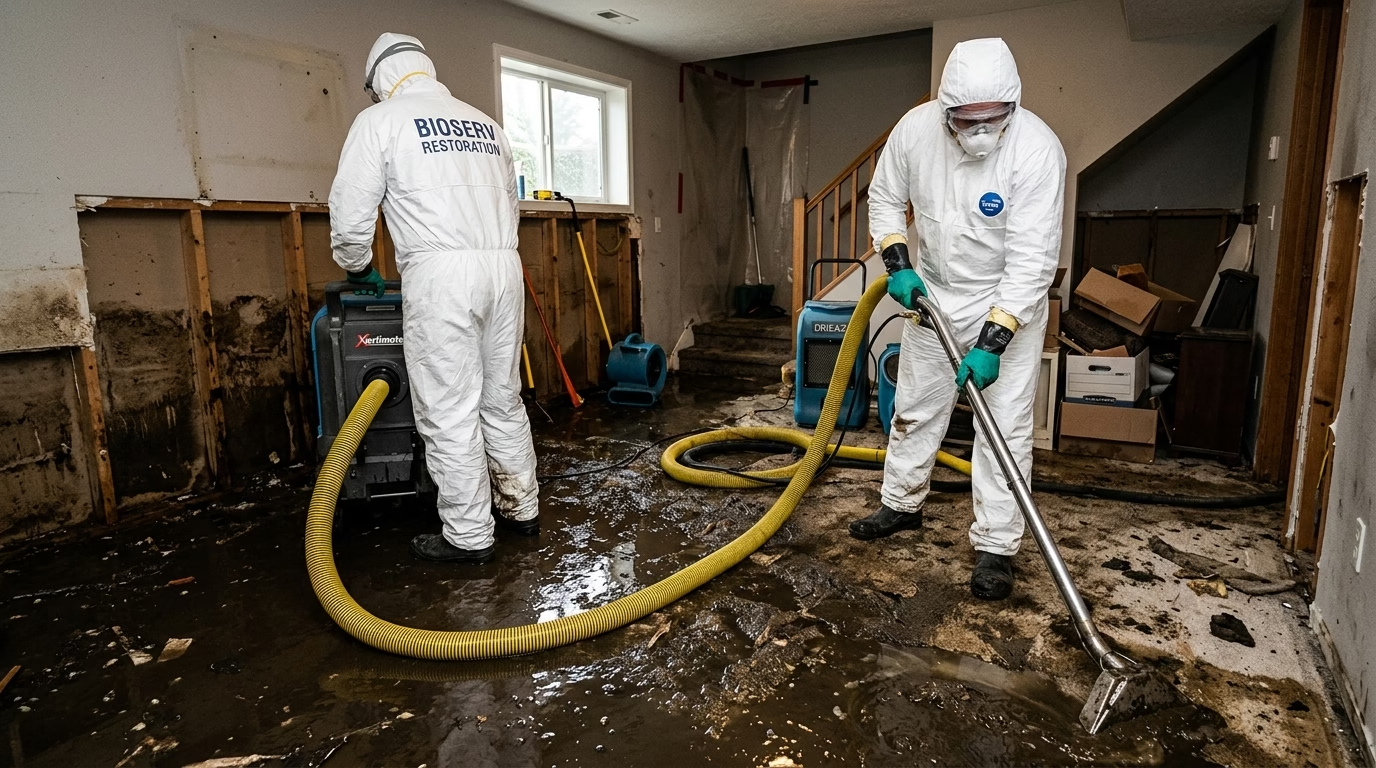
The IICRC S500 standard defines three water damage categories, and getting the category wrong can turn a “simple leak” into a costly health and rebuild problem. For homeowners, that classification affects how fast materials deteriorate, what can be safely dried, and whether you’re facing contamination that requires protective containment and disposal. Understanding water damage categories also matters for documentation when you’re filing an insurance claim, since adjusters often ask where the water came from and what it contacted. Category 1 (clean), Category 2 (significantly contaminated), and Category 3 (grossly contaminated) each demand different cleanup, drying, and safety steps. This article will break down what each category means, common sources, and what to do next to protect your home.
What Water Damage Categories Mean (Category 1 vs 2 vs 3)
This section breaks down water damage categories (Category 1, 2, and 3) in plain English so you can quickly gauge health risk and urgency. These categories come from the IICRC S500 standard and are based on contamination level—and they can worsen as water sits, spreads, and contacts dirty materials.
How the IICRC S500 defines water damage categories
Water damage categories are about what’s in the water, not how much water you have. A small amount of Category 3 can be more dangerous than a large Category 1 loss. In general, the longer water remains in place and the more surfaces it touches (carpet pad, drywall, insulation), the higher the risk of bacteria and mold growth.
- Category 1 (Clean Water): Water from a sanitary source (like a supply line) that has not contacted contaminants. Common example: a cold-water copper/PEX pinhole leak caught quickly.
- Category 2 (Gray Water): Water with meaningful contamination that can cause illness if swallowed or contacted. Common example: a washing machine discharge overflow or dishwasher leak.
- Category 3 (Black Water): Grossly contaminated water containing pathogens. Common example: sewage backup, toilet overflow with solids, or floodwater that has traveled across the ground.
- Time matters: A Category 1 loss can become Category 2/3 as it sits and wicks into porous materials—especially when it reaches dust, soil, or building cavities.
Recognizable examples (and why exposure time changes the risk)
Homeowners often ask, “Is this just clean water?” The safest approach is to look at the source and what the water touched. Warm, stagnant water, wet insulation, and soaked drywall create conditions where microbes can multiply and odors can set in, which also complicates drying and repairs. For the formal definitions and professional restoration expectations, see the IICRC S500 reference overview here: IICRC S500 Water Damage Restoration Standard.
- Supply-line leak (Cat 1): If it’s from a pressurized cold line and you shut it off fast, it often starts as Cat 1—but can worsen after extended contact with carpet pad and drywall.
- Fridge, dishwasher, or washer overflow (Cat 2): Even if it “looks clear,” it may contain detergents, food waste, and bacteria from hoses and drains.
- Sewage or toilet backup (Cat 3): Treat anything involving sewage as Category 3; porous items typically require removal, and the area needs controlled cleaning and antimicrobial steps.
- Insurance reality check: Carriers like State Farm, Allstate, USAA, Farmers, and Liberty Mutual often require documentation (photos, drying logs, moisture readings) to support mitigation and claim handling.
Pro Tip: If you can’t confidently identify the source—or the water passed through a drain, toilet, or outside—treat it as Category 3 until a qualified, IICRC-certified team assesses it with moisture mapping and a written scope.
When in doubt, it’s safer to act fast: stop the water, protect people and pets from contact, and start professional drying before secondary damage sets in. For next steps and what a proper mitigation process looks like, see our water damage restoration guide.
How to Identify Whether You’re Dealing With Category 1, 2, or 3 Water
This section shows you how to quickly sort common leaks and floods into the IICRC S500 water damage categories (Category 1, 2, or 3). The goal is to help you make safer decisions in the first hour—what you can wipe up yourself, what needs protective gear, and when to stop and call an IICRC-trained crew.
Start With the Water Source (Fastest Way to Classify It)
In the field, the source usually tells the story. Category 1 (“clean water”) starts clean at the point of release; Category 2 (“gray water”) has meaningful contamination; Category 3 (“black water”) includes sewage or grossly contaminated water. Keep in mind categories can change: clean water that sits too long, soaks materials, or mixes with contaminants may be treated as Category 2 or 3.
- Category 1: Fresh supply line leaks (PEX/copper), a burst pipe, or a leaking toilet tank line (not the bowl). Often clear, little/no odor, but can spread fast through drywall and subfloors. See more on emergency pipe failures at burst pipe water damage.
- Category 2: Dishwasher discharge, washing machine overflow, fridge condensate line back-up, or water from a toilet bowl with no visible sewage. Expect bacteria and higher risk if it touches carpet padding or porous trim.
- Category 3: Sewage backup, toilet overflow with feces/urine, septic/municipal line issues, river/flood water, or water that passed through contaminated building materials. Treat as hazardous—keep people and pets out.
- Time window clue: If you can’t confirm the source is clean—and it’s been wet for 24–48 hours—assume higher contamination risk and faster microbial growth.
Use Visible Signs, Smell, and “Hidden Spread” Clues
Not all damage shows on the surface. Water travels along framing, under flooring, and behind baseboards; what looks like a small puddle can become a multi-room dry-out. Category 2–3 situations also raise health concerns, and many insurance carriers (like State Farm, Allstate, USAA, Farmers, and Liberty Mutual) often expect documentation and professional mitigation for contaminated losses.
- Odor: Musty/sour smells suggest contamination or prolonged moisture; sewer-gas or “rotten” odor points toward Category 3.
- Color and debris: Cloudy water, sediment, or visible particulates typically indicates Category 2–3.
- Where it appeared: Water at floor edges, under baseboards, or bubbling paint can signal hidden wicking in drywall and insulation.
- Materials affected: Wet carpet pad, MDF baseboards, insulation, and drywall can hold contamination—Category 2–3 often requires removal rather than “drying in place.”
- Heat and humidity: Warmer indoor conditions (roughly 70°F+) can accelerate odor and microbial activity, making fast drying and dehumidification more urgent.
Pro Tip: If you’re unsure, treat it as the higher category: shut off the water, cut power to the wet area if safe, avoid running fans that can aerosolize contaminants, and take photos before cleanup for your claim file.
For the industry definitions behind water contamination categories and professional cleanup expectations, review the IICRC S500 overview at https://iicrc.org/s500/. If you need help documenting and coordinating next steps, start with our water damage restoration page.
What to Do Immediately After Water Damage Happens
The first hour after a leak, overflow, or flood is when you can prevent the most damage—and keep people safe. These steps help you respond correctly while keeping water damage categories (IICRC S500 Category 1, 2, or 3) from getting worse.
First 60 minutes: stop the source and make it safe
Your priority is controlling the water and reducing electrical and slip hazards. If you can safely stop the source, do it; if not, get out and call for help. Treat any unknown water as potentially contaminated until proven otherwise, because misjudging the category can spread bacteria through the home.
- Stop the source: Shut off the nearest fixture valve or the home’s main water shutoff. For a water heater issue, turn off the cold supply, and shut down power (electric at breaker; gas to “pilot/off” if you know how).
- Shut off electricity where appropriate: If water is near outlets, the panel, or appliances, turn off power at the main breaker—do not walk into standing water to do it. When in doubt, leave and call the utility or an emergency plumber.
- Protect people and pets: Keep kids and animals away, especially if the water could be Category 2 (grey) or Category 3 (black). Wear gloves and closed-toe shoes; for suspected Category 3, use an N95 or better and avoid exposure.
- Limit spread: Close doors, put down towels at thresholds, and move rugs/fabric items away from wet areas. Don’t run HVAC if it could circulate contaminants.
- Start drying only if it’s clearly clean water: For obvious Category 1 (clean supply line) losses, you can run fans and keep indoor temperature around 70–80°F for better evaporation. If it’s sewage, dishwasher backup, or floodwater, skip DIY drying and focus on containment.
Document damage and avoid actions that worsen contamination
Photos and notes help both your restoration team and your insurance claim. Most carriers (including State Farm, Allstate, USAA, Farmers, and Liberty Mutual) want prompt notice and reasonable mitigation—but they don’t want you to discard evidence or spread contaminated water.
- Take photos/video immediately: Capture the source, wet building materials, affected rooms, and any damaged contents before moving items.
- Write down time windows: Note when you first saw water and when you shut it off; Category 1 can degrade to Category 2/3 as it sits and contacts soils and microbes.
- Don’t cross-contaminate: Don’t track wet shoes through the house, and don’t use the same shop-vac on clean areas after vacuuming dirty water.
- Save samples if needed: Keep a small piece of damaged flooring/drywall if it shows staining or suspected contamination (bag it and label it).
Pro Tip: If you’re unsure of the water damage categories, assume a higher category and call an IICRC-certified team—misclassifying Category 2/3 as “clean” is how bacterial contamination gets spread during cleanup.
For more on how emergency mitigation and documentation tie into the claim process, see our insurance page. For authoritative safety guidance on electrical hazards around water, review FEMA’s recommendations here: https://www.ready.gov/floods.
How to Contain the Damage and Prevent Category “Upgrades”
This section explains how to stop a small loss from turning into a major one by controlling moisture, contamination, and exposure time. Understanding how water damage categories can change helps you act fast and document the right details for your plumber, restoration team, and insurance carrier.
Why “Clean” Water Can Become Category 2 or 3
Category 1 water (clean supply-line water) doesn’t stay clean once it spreads through a building. As time passes, it picks up dirt, microbes, and chemicals from floors, drywall, insulation, and contents—especially in warm, humid conditions. According to the IICRC S500 standard, water can be reclassified as conditions change, which is why fast mitigation matters for both safety and salvage decisions. For definitions and categories referenced in the standard, see the IICRC S500 overview here: https://iicrc.org/s500/.
Common “upgrade” triggers include a backup from a sink, dishwasher, or washing machine, or any water that contacts the ground, trash, or building cavities. If a loss sits, microbes multiply and odors develop, and a job that started as “clean” can be treated more like Category 2 (significant contamination) or Category 3 (grossly contaminated) for safety and liability. That shift can also affect what gets removed versus dried in place—and how your adjuster views the scope.
Containment, Extraction, and Drying Basics That Prevent Reclassification
Priority one is stopping the source (shutoff valve, main, or an emergency plumber for failed fittings like PEX crimps, copper pinholes, or a water heater T&P valve discharge). Next is rapid extraction and controlled drying to keep materials from wicking, swelling, and harboring bacteria. Proper drying typically requires air movement plus dehumidification; “just running fans” often spreads moisture deeper or into unaffected rooms. If you need help coordinating mitigation, see water damage restoration.
- Time window: Aim to start extraction and drying within 24–48 hours to reduce microbial growth risk and prevent Category 1 water damage categories from being treated as more contaminated.
- Isolation: Close doors, place plastic sheeting over openings, and avoid running your HVAC until filters and returns are protected; keep indoor temperature around 70–80°F when possible to support dehumidification without “baking” materials.
- Safe extraction: Use wet vacs only for small, clean spills; for larger losses, pros use truck-mount extraction and weighted tools to pull water from carpet and pad before it wicks into drywall.
- Drying targets: Restoration teams monitor moisture content in wood/drywall and run LGR dehumidifiers and air movers until readings stabilize—often 3–5 days for typical structural drying, longer for dense materials.
- Insurance reality: Most carriers (e.g., State Farm, Allstate, USAA, Farmers) want prompt notice and photos; document the source, affected rooms, and mitigation steps to avoid scope disputes.
Pro Tip: Take wide and close-up photos before removal, save a small sample of any visibly contaminated material, and write down when the leak started—time and contamination evidence can be crucial if the water damage categories are questioned during the claim.
Materials that typically can’t be saved after prolonged wetting or contamination include swollen particleboard, wet insulation, mattresses, and carpet pad (especially if impacted by Category 2/3 water). Drywall that has wicked water above the baseboard line often needs to be flood-cut to remove compromised material and allow airflow inside the wall. When in doubt, an IICRC-trained crew can determine what’s cleanable versus what must be removed to prevent odors, mold, and a costly rework.
When to Call an IICRC-Certified Professional and How the Handoff Works
This section explains when DIY stops being safe or effective and when you should bring in an IICRC-certified restoration team. It also walks through what happens after you call—how water damage categories are confirmed, how drying is managed, and how insurance documentation typically works.
Triggers that require professional help (and why they matter)
Water damage categories aren’t just labels—they determine health risk, required PPE, and whether materials can be cleaned or must be removed under IICRC S500 guidelines. Category 2 and Category 3 losses can contain harmful contaminants, and delays can escalate a clean loss into a more hazardous one as water sits and absorbs soils. If the water source is unknown, has odors, or involves a drain line, assume higher risk until proven otherwise.
- Any Category 2 or Category 3 water: “gray” water (appliance discharge, overflow) or “black” water (sewage, flooding) typically needs controlled demolition and antimicrobial cleaning.
- Sewage or toilet backups: Treat as Category 3 until a qualified pro confirms otherwise; porous materials (carpet pad, drywall) often can’t be salvaged.
- Large loss size: If affected area is bigger than a single room or you have water in multiple levels, call immediately—faster extraction and dehumidification reduces secondary damage.
- Hidden moisture: Warped baseboards, bubbling paint, or damp smells often mean water is behind drywall or under flooring—metering and thermal checks are needed.
- HVAC involvement: Water in returns, supply trunks, or insulation can spread contamination; Category 2/3 water around HVAC is a stop-and-call situation.
What the handoff looks like: inspection, drying, and documentation
A certified crew will identify the source, confirm the water damage categories, and set a drying plan that matches the materials and contamination level. Expect moisture mapping, extraction, containment (if needed), and placement of air movers and dehumidifiers; typical structural drying can take several days depending on conditions and material saturation. If temperatures are low (around 60°F and below), drying can slow dramatically—pros may recommend controlled heat to keep equipment effective without damaging finishes.
On insurance jobs, the team usually documents the loss with photos, moisture readings, and an itemized scope (often in standard estimating formats). They may coordinate with carriers like State Farm, Allstate, USAA, Farmers, or Liberty Mutual, but coverage decisions still come from the adjuster and your policy. For a deeper breakdown of what to expect, see our insurance page.
Pro Tip: If this is Category 2/3 water, avoid running your HVAC and don’t tear out materials until photos and moisture readings are taken—good documentation can prevent claim disputes later.
If you need outside help understanding claim rights, deadlines, or dispute resolution, your state insurance department is a reliable starting point; use the NAIC directory here: https://content.naic.org/state-insurance-departments.
Key Takeaways
Water damage categories describe contamination risk, and acting fast helps limit health hazards, drying time, and the chance the loss gets worse.
| Point | Details |
|---|---|
| What the categories mean | Category 1 is clean supply water; Category 2 has contaminants; Category 3 is gross sewage/floodwater requiring strict safety and disposal. |
| How to identify the category | Check the source and where it traveled: toilet overflows, dishwasher leaks, sump backups, and floodwater usually indicate Category 2 or 3 conditions. |
| Immediate first steps | Stop the water, shut power if needed, document damage for insurance, and remove valuables; avoid contact with suspect water and porous items. |
| Prevent category “upgrades” | Start drying quickly: extract standing water, increase ventilation, and dehumidify; delays and contact with soils can turn Category 1 into Category 2/3. |
| Calling an IICRC pro | Bring in IICRC-certified technicians for Category 2/3, sewage, or hidden moisture; expect moisture mapping, containment, drying logs, and claim-friendly documentation. |
What we've learned from watching homeowners handle this wrong
Most homeowners don’t get burned by the water itself—they get burned by guessing what “kind” of water it is and treating everything like a simple spill. In the first 30 minutes, people focus on towels and fans instead of source control, documentation, and containment. Category matters because it changes how we handle materials, what can be saved, and what has to be removed for health reasons. By the time we arrive, the problem has often “upgraded” from Cat 1 to Cat 2 or 3 because of delays and cross-contamination.
Mistake #1 is not stopping the source and thinking the leak is “small.” A toilet supply line can dump 2–3 gallons per minute, so 40 minutes of “I’ll deal with it after this meeting” can mean 80–120 gallons in the floor system. We walk into homes where the shutoff is right behind the toilet, but it was never touched. That water wicks under baseboards and into drywall, and suddenly your drying plan turns into a demolition plan.
Mistake #2 is treating a Category 2 or 3 loss like Category 1 because it looks clear. A dishwasher backup, washing machine overflow with dirty water, or toilet overflow isn’t “just water,” even if it doesn’t smell yet. We’ve seen homeowners shop-vac sewage water, then set the same vac in the garage next to kids’ bikes. That’s how contamination spreads and why IICRC-trained crews use proper cleaning and disposal protocols.
Mistake #3 is relying on box fans and guessing it’s dry in 24 hours. In real drying, we’re monitoring moisture content, temperature, and dehumidification—often 3–5 days when it’s done correctly. When people trap moisture behind paint or new baseboards, mold shows up later and insurance starts asking hard questions.
What actually matters is preparation: know where your main water shutoff is, take photos before you move anything, and call for help early when the source is unknown or the water isn’t clean. If you’re filing a claim, keep receipts and a simple timeline, and don’t throw away damaged materials until it’s documented. The fastest, cheapest outcome usually comes from treating the first hour like an emergency, not a weekend project.
— A-Star Restoration
A-Star Restoration is ready when you need emergency help
When you’re dealing with Category 1, 2, or 3 water, time and containment matter. A-Star Restoration connects you to 24/7 help from IICRC-certified pros who can assess the source, classify the water, and start proper drying and sanitizing before damage spreads. If you need immediate Water Damage support, we’ll help coordinate the next steps fast—whether it’s extraction, dehumidification, or safe demolition.
We also help you make smart decisions under pressure, including what to document and how to approach insurance claims. For budgeting and expectations, review restoration costs, and if the loss started with a plumbing break, see our burst pipe guidance. If moisture lingers or contamination is suspected, we can refer qualified teams for mold remediation as well.
FAQ
What are the water damage categories and why do they matter?
Per IICRC S500, water damage is classified as Category 1 (clean supply line), Category 2 (significant contamination like washer overflow), and Category 3 (grossly contaminated, e.g., sewage or floodwater). Categories matter because they dictate safety precautions, what materials must be removed, and how fast drying must start—typically within 24–48 hours—to reduce mold risk. Insurers like State Farm, Allstate, USAA, Farmers, and Liberty Mutual often require documentation from IICRC-certified pros; Category 3 can drive higher costs (often $3,000–$15,000+). Learn more at water damage restoration.
How do I know if my water damage is Category 3 (sewage) or just dirty water?
Category 3 (“black water”) is any water with feces or high contamination risk: sewage backups, toilet overflows with solids, or floodwater from outside. “Dirty water” (Category 2) is gray water from sources like a washing machine drain or tub overflow without sewage. If the source is unknown, it’s safest to treat it as Cat 3 within 24–48 hours because bacteria can spread fast and materials often must be removed. An IICRC-certified technician can confirm classification; for claims with State Farm, Allstate, USAA, Farmers, or Liberty Mutual, document the source and expect $1,000–$10,000+ depending on demolition and drying. See water damage restoration.
Can Category 1 water damage become Category 2 or 3 if I wait too long?
Yes. Under IICRC S500 guidance, clean Category 1 water can degrade to Category 2 within about 24–48 hours, and can become Category 3 if it contacts sewage, floodwater, or heavy microbial growth. The longer materials stay wet, the more likely you’ll need tear-out plus antimicrobial cleaning and drying (often 3–5 days). Insurers like State Farm, Allstate, USAA, Farmers, and Liberty Mutual may question delayed mitigation, and costs can jump from roughly $1,000–$5,000 to $5,000–$20,000+. Get IICRC-certified help fast via water damage restoration.
Will homeowners insurance cover Category 2 or 3 water damage and mold?
Sometimes, but it depends on the policy and the cause. Many carriers (State Farm, Allstate, USAA, Farmers, Liberty Mutual) may cover sudden, accidental Category 2–3 losses (like a burst pipe or sewage backup) after your deductible, but often exclude long-term leaks, maintenance issues, and mold beyond limited endorsements—commonly $5,000–$10,000. Timing matters: document within 24–48 hours and use an IICRC-certified firm for proper drying and contamination protocols. See insurance claim guidance.
Can I dry out water damage myself, or should I hire a restoration company?
You can DIY small, clean Category 1 spills if you can stop the source, extract water fast, and fully dry the area within 24–48 hours using fans and dehumidification; beyond that, risk jumps. Category 2 (gray water) and Category 3 (sewage/flood) should be handled by an IICRC-certified restoration company for proper PPE, containment, antimicrobial cleaning, and documentation. If you’re filing with State Farm, Allstate, USAA, Farmers, or Liberty Mutual, professional moisture readings/photos can support the claim. See water damage restoration.