
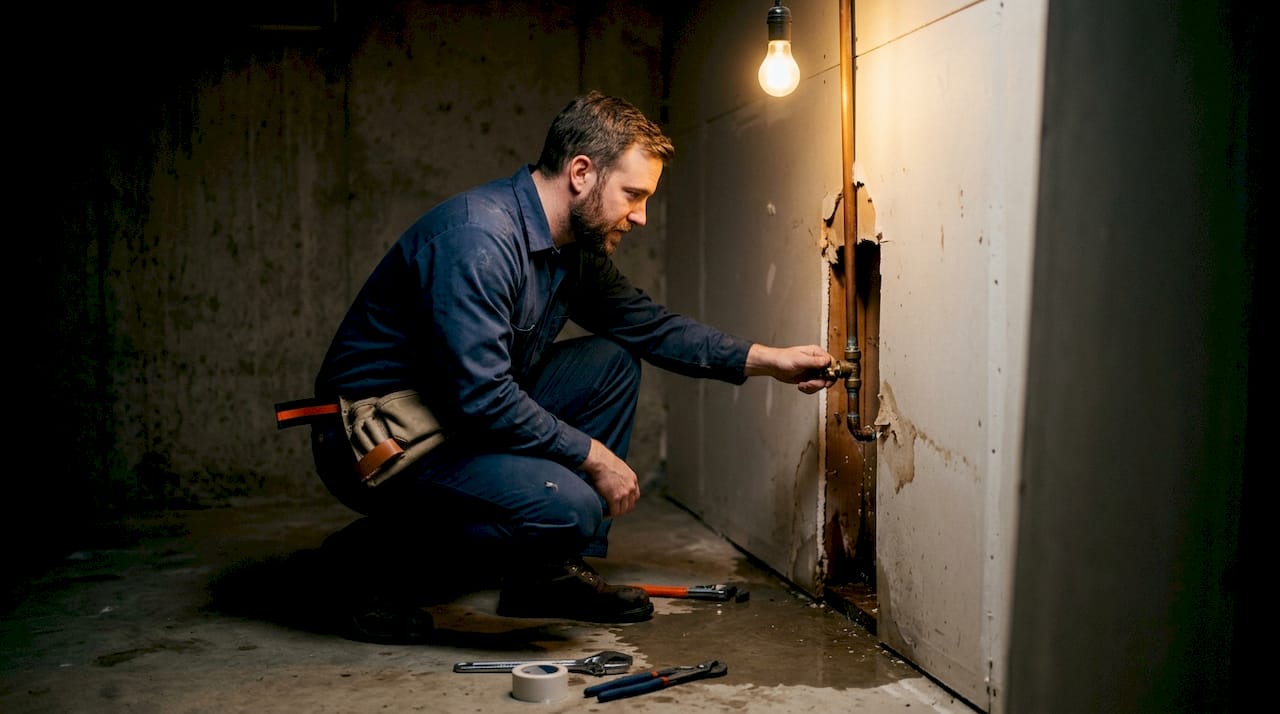
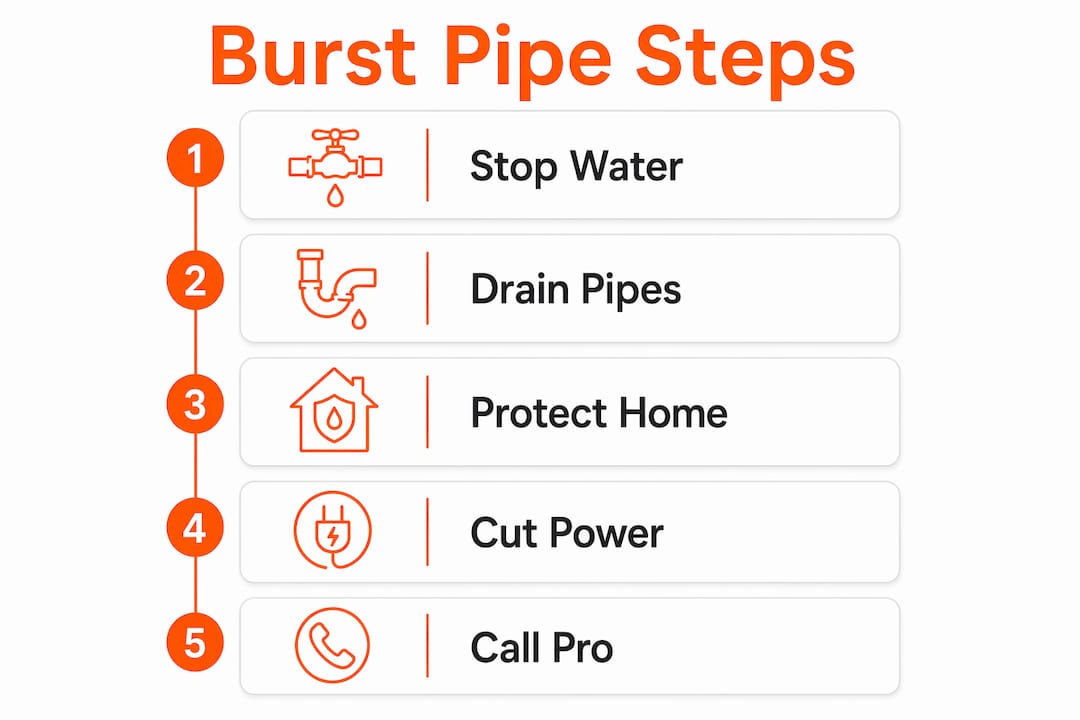
A burst pipe is a plumbing emergency defined by one urgent priority: stop the water before it stops you. A half-inch burst pipe can release more than 50 gallons per hour, flooding a 10x10 room with 3 inches of standing water in under 60 minutes. Knowing what to do if a pipe burst, before panic sets in, is the difference between a manageable repair and a full-scale water damage restoration. The first 30 minutes are critical. Your job is to isolate the water, protect yourself from electrical hazards, and document the damage for your insurance claim.
What to do if a pipe burst: shut off the water first
The main water shutoff valve is the single most important thing to find before a plumbing emergency happens. Once a pipe fails, you have seconds to act, not minutes to search.
Where to find your shutoff valve
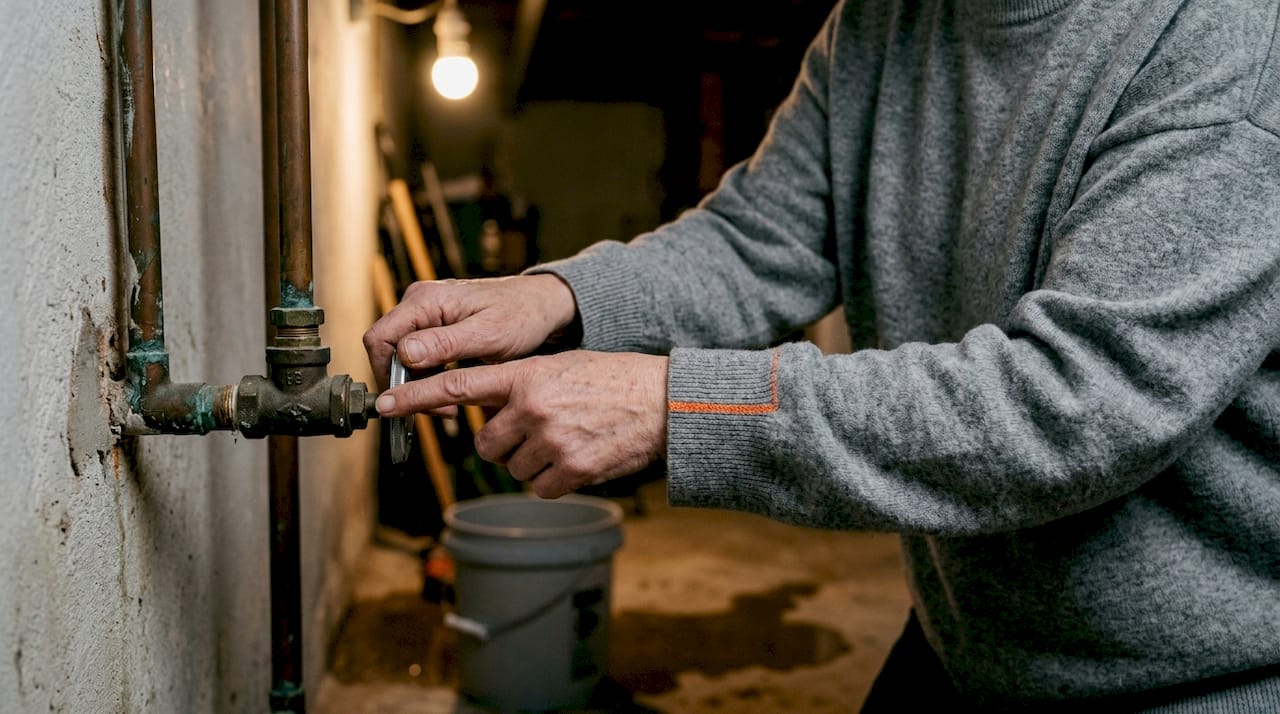
Valve location depends on your home type. In most single-family homes, the main shutoff sits where the water line enters the house, typically in the basement, crawl space, utility room, or near the water meter. In apartments, look for a shutoff inside the unit near the water heater or under the kitchen sink. Condos often have a shutoff in a hallway utility closet.
- Lever valves (ball valves): turn 90 degrees to close. When the handle is perpendicular to the pipe, the water is off.
- Gate valves (round wheel handles): turn clockwise until fully closed. Never stop halfway. A partially closed gate valve still allows flow and can cause pressure buildup.
- Fixture isolation valves: small oval valves behind toilets and under sinks. Use these when only one fixture is affected, so the rest of the house keeps water.
After closing the valve, open a faucet to confirm water flow has stopped. If water keeps running, the valve did not seat fully or you closed the wrong one.
Pro Tip: Walk through your home right now and locate your main shutoff. Practice turning it. Many homeowners discover a stuck or corroded valve only when they need it most.
How to drain residual water from your pipes
Shutting off the main valve does not stop all leaking immediately. Pipes still hold 5 to 15 gallons of residual water under pressure, and that water will continue to leak from the burst point until it drains.
Follow these steps in order to relieve pressure and drain trapped water:
- Start at the highest floor. Open a cold water faucet on the top level of your home. This lets air into the system so water can flow down and out.
- Work your way down. Open faucets on each floor below, moving toward the lowest point in the house.
- Open the lowest faucet last. A basement utility sink or outdoor hose bib is ideal. This is where most of the residual water will exit.
- Flush toilets once. This empties the tank and bowl, reducing water sitting in supply lines.
- Turn off the hot water heater. If your water heater is electric, switch it off at the breaker before the tank runs dry. A dry heating element burns out fast.
Opening faucets after shutoff releases pipe pressure and cuts ongoing leakage at the burst point. This step alone can significantly reduce the total water damage before a plumber arrives.
Pro Tip: Do not open hot water faucets first if you suspect the burst is near the water heater. Let the system cool and drain cold lines first to avoid scalding.
How to protect your home and belongings after stopping the flow
Water damage spreads fast. Once the supply is off and pipes are draining, your next job is containment.
Move electronics, area rugs, upholstered furniture, and any paper documents away from the wet zone immediately. Water wicks into carpet padding and subflooring within minutes, and mold can begin developing in as little as 24 to 48 hours in wet conditions. Getting items off the floor is faster than drying them out later.
Use towels, mops, and buckets to contain pooling water. Place buckets under active drip points. Roll towels against doorways to stop water from spreading to dry rooms. If you have a wet/dry shop vacuum, use it to pull standing water from hard floors before it seeps under baseboards.
Temporary fixes like repair tape and pipe clamps can slow a small leak, but they are not permanent solutions. These materials are not code-compliant and will fail under normal residential water pressure. Use them only to reduce dripping while you wait for a licensed plumber, never as a substitute for proper repair.
Document everything before you clean up. Take 4 to 6 photos of the burst pipe location, the surrounding damage, and any affected belongings before moving or removing anything. Your insurance adjuster needs visual proof of the original damage, and photos taken after cleanup carry far less weight in a claim. For a deeper look at how burst pipe water damage claims work, A-Star Restoration has a step-by-step guide specific to Texas homeowners.
When should you turn off electricity during a burst pipe?
Water and electricity together create a lethal hazard. Electricity must be shut off if water is approaching outlets, appliances, or your breaker panel.
If water is pooling near your electrical panel, do not touch it. Leave the building immediately and call 911. Never attempt to shut off a wet breaker panel yourself. This is a life-safety situation, not a DIY task.
If the panel is dry and accessible, go to your main breaker box and switch off the breakers for any zone where water is present. You do not need to cut power to the entire house if only one area is affected. Label your breakers in advance so you can act quickly under stress.
Warning signs that require immediate evacuation include sparking outlets, flickering lights in the wet area, a burning smell, or any buzzing sound near standing water. Do not re-enter until a licensed electrician confirms the area is safe.
Pro Tip: Keep a flashlight near your breaker panel. If a burst pipe trips a breaker and cuts power to part of the house, you will need it to navigate safely.
How and when to call a professional plumber or restoration service
The first 30 minutes after a burst pipe should focus on isolation, safety, and documentation, not permanent repair. Once those steps are done, call a licensed plumber immediately.
When you call, have this information ready:
- Your address and the location of the burst pipe in the home
- The pipe material if you know it (copper, PEX, PVC, or galvanized steel)
- Whether water is still flowing or has been isolated
- Whether electricity has been shut off in the affected area
- A description of visible damage and any photos you can send
Emergency plumbing calls differ from scheduled appointments. A licensed emergency plumber will assess the break, confirm the isolation is complete, and perform a structured repair sequence: isolation, pressure relief, damage assessment, temporary stabilization, permanent repair, and final inspection. Code-compliant permanent repairs require a licensed professional. DIY tape and clamps do not meet this standard.
After the plumber stabilizes the pipe, water damage restoration becomes the next priority. Standing water left in walls, floors, or insulation leads to mold growth. A restoration crew uses industrial drying equipment and moisture meters to confirm all affected materials are dry. A-Star Restoration connects homeowners with 24/7 water damage restoration professionals nationwide who handle both the plumbing repair and the structural drying.
For insurance purposes, keep all receipts from emergency repairs, temporary materials, and any hotel stays if the home becomes uninhabitable. Your policy's coverage for sudden and accidental water damage typically requires proof that you acted quickly to minimize loss. Delayed action can reduce or void a claim.
Key Takeaways
A burst pipe emergency requires immediate water isolation, electrical safety checks, and thorough documentation before any repair attempt begins.
| Point | Details |
|---|---|
| Shut off water first | Locate your main shutoff valve and close it completely before doing anything else. |
| Drain residual pressure | Open faucets from top to bottom to release 5-15 gallons of trapped water still in the pipes. |
| Document before cleanup | Take 4-6 photos of the burst site and damage before moving anything for insurance purposes. |
| Manage electrical risk | Turn off breakers in wet zones; evacuate immediately if the panel itself is wet. |
| Call licensed professionals | Emergency plumbing and restoration require licensed crews for code-compliant, permanent repair. |
What I've learned from watching homeowners handle this wrong
The most common mistake I see is not the panic. Panic is understandable. The mistake is where people direct their energy in the first five minutes.
Most homeowners run toward the burst pipe first. They grab towels, they stare at the damage, and they lose two or three critical minutes before anyone touches a shutoff valve. By then, a half-inch break has already released close to three gallons. That water is already under your flooring.
The second mistake is skipping the faucet drain step. Shutting the main valve feels like the job is done. It is not. The pipes still hold water under pressure, and that water will keep dripping from the burst point until it has somewhere to go. Opening faucets is not optional. It is the step that actually stops the leak.
The third mistake is the documentation gap. Homeowners clean up fast because the mess is stressful. Then they call their insurance company with nothing to show. A few photos taken before cleanup can mean thousands of dollars in reimbursement. The camera on your phone takes ten seconds. Use it.
Preparation matters more than most people admit. Knowing where your shutoff valve is, knowing which breakers cover which rooms, and having a plumber's number saved before an emergency happens. These are the things that separate a $500 repair from a $15,000 restoration.
— A-Star Restoration
A-Star Restoration is ready when you need emergency help
A burst pipe does not wait for business hours, and neither does A-Star Restoration. Whether you are dealing with a frozen pipe failure in January or a sudden supply line break at 2:00 AM, A-Star Restoration connects you with licensed emergency plumbers and restoration crews available 24/7 across the United States.
From emergency burst pipe repair to full water damage restoration, mold remediation, and insurance documentation support, A-Star Restoration handles every stage of the recovery. Homeowners in Texas can reach local crews fast through A-Star Restoration's Houston emergency restoration page. One call connects you with the right professional for your situation, no matter where you are.
FAQ
What is the first thing to do when a pipe bursts?
Shut off the main water supply valve immediately to stop the flow. Then open faucets throughout the home to drain residual pressure from the pipes.
How do I know if a pipe has burst inside a wall?
Signs of a burst pipe inside a wall include water stains, bubbling paint or wallpaper, a sudden drop in water pressure, and the sound of running water when no fixtures are in use.
Can I use repair tape to fix a burst pipe myself?
Repair tape and pipe clamps are temporary measures only. They are not code-compliant and will fail under normal residential water pressure, so a licensed plumber must complete the permanent repair.
When do temperatures cause pipes to freeze and burst?
Freeze-related pipe failures increase sharply when temperatures drop below 20°F for extended periods. Pipes in exterior walls, unheated crawl spaces, and garages carry the highest risk.
Does homeowners insurance cover a burst pipe?
Most standard homeowners insurance policies cover sudden and accidental burst pipe damage. Coverage depends on acting quickly to minimize loss, so document damage with photos and call your insurer as soon as the emergency is stabilized. For more detail on the insurance claims process, A-Star Restoration's guide covers Texas-specific coverage rules.